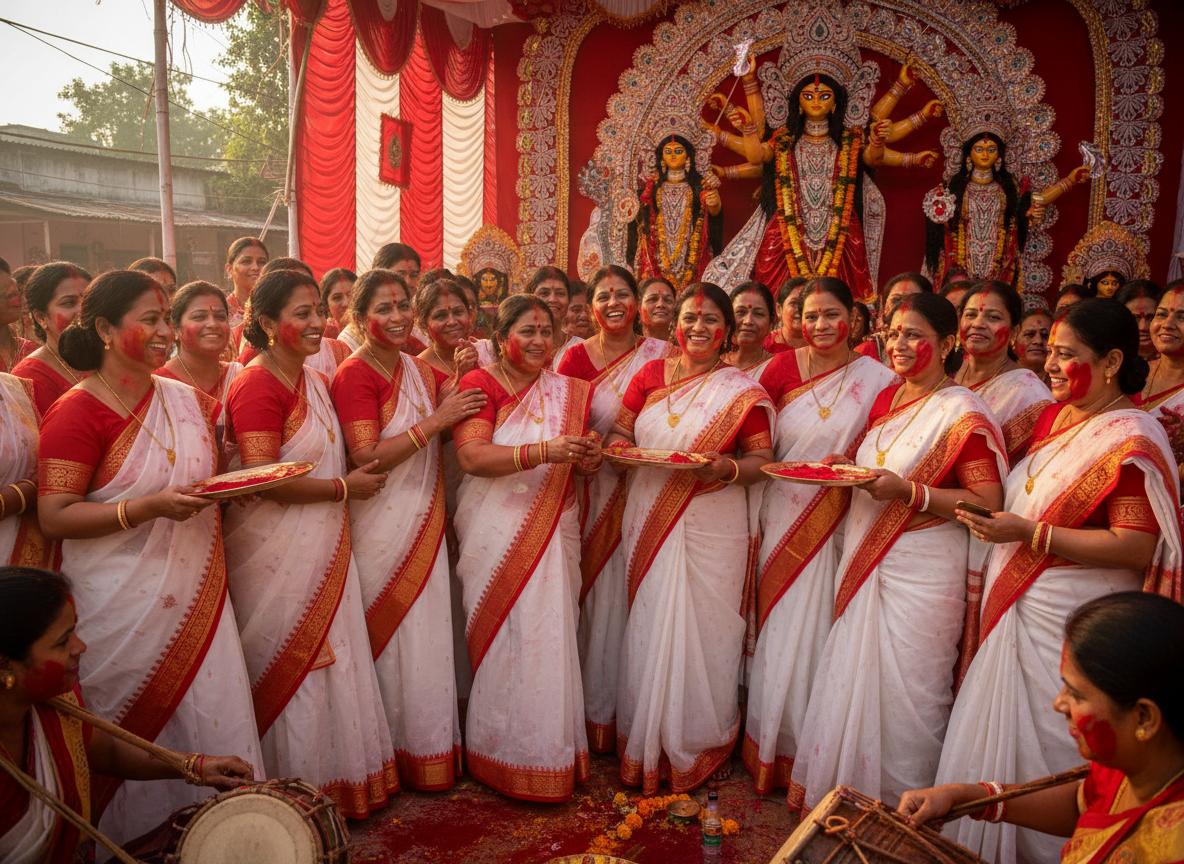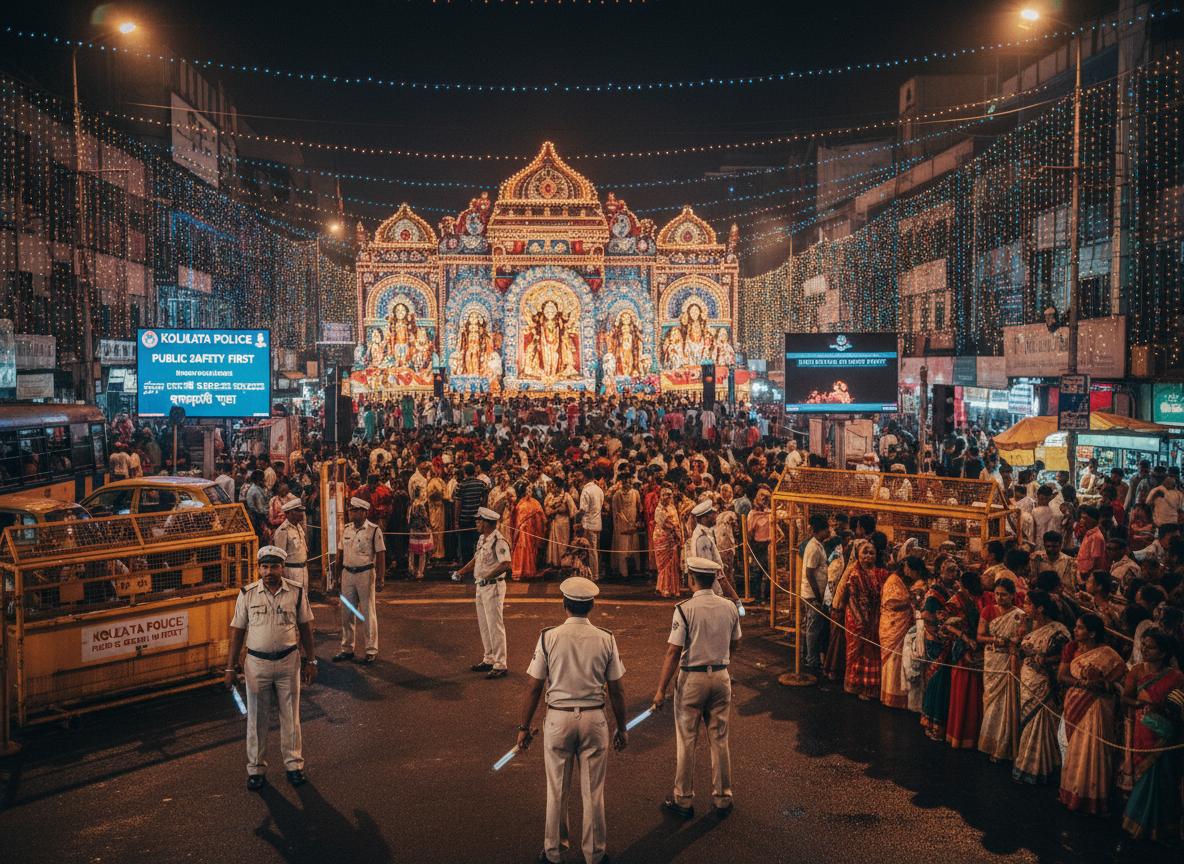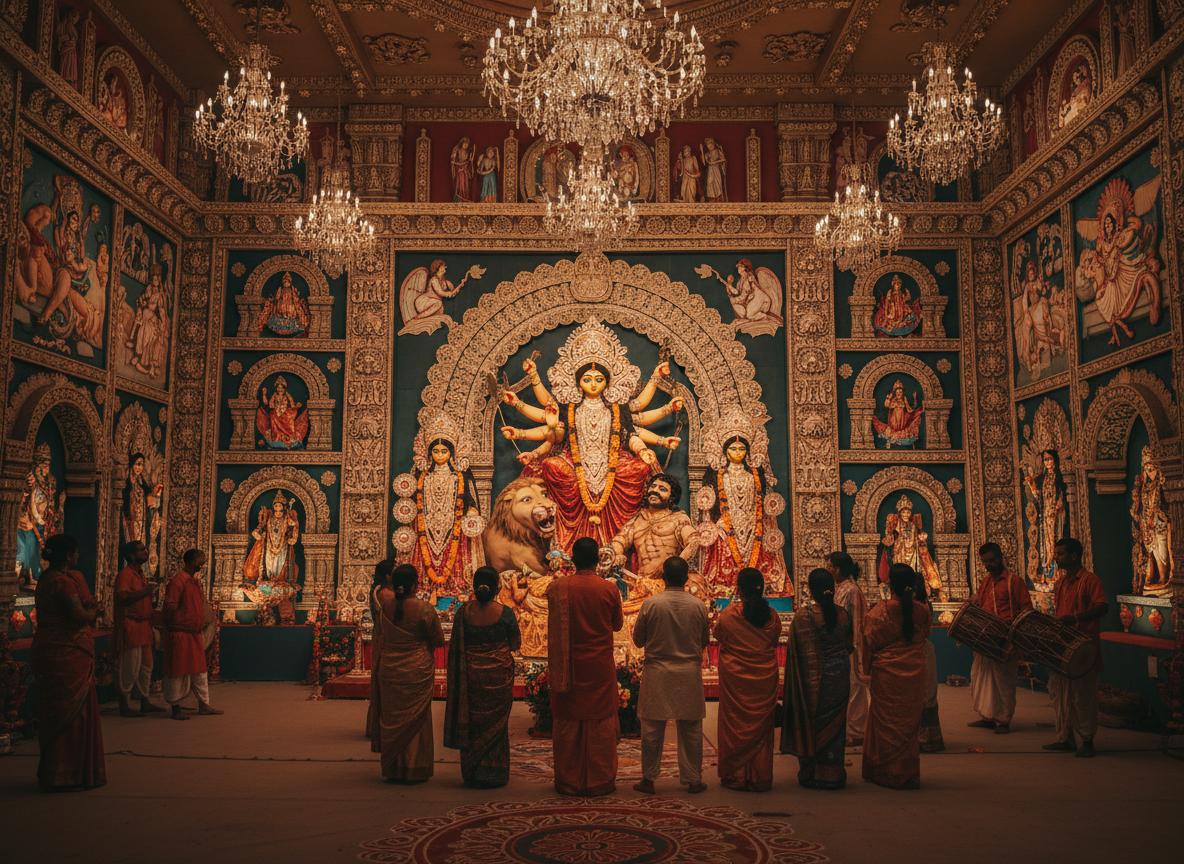

Simla Byayam Samity Sarbojanin Durgotsav
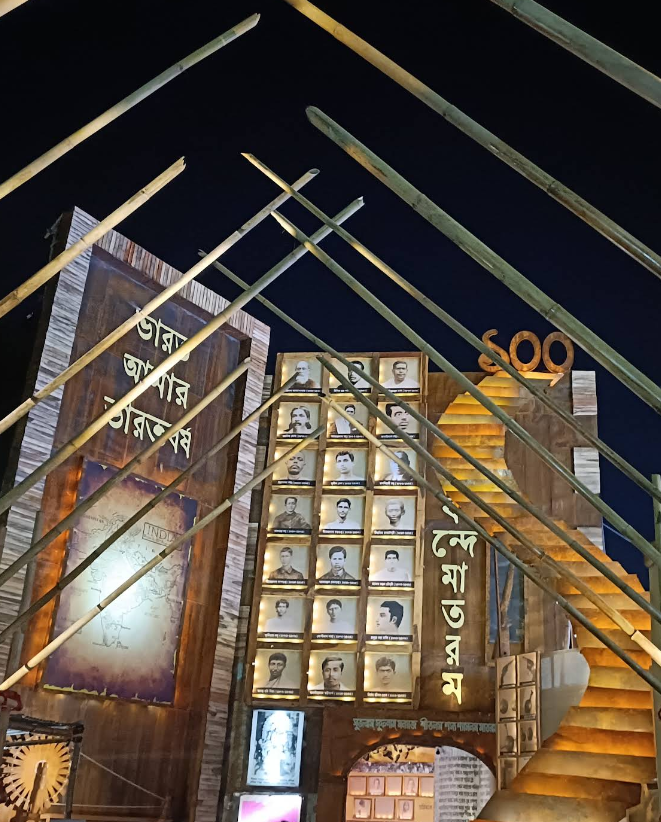

Brief history of Simla Byayam Samity Sarbojanin Durgotsav:
Establishment & Age: Simla Byayam Samity Sarbojanin Durgotsav began in 1926, founded by revolutionary Atindranath Basu with support from Mahendranath Dutta, Swami Vivekananda’s brother. In 2026, it is celebrating its 101st year.
The samity itself was founded on 2 April 1926 as a physical-training and youth organisation. Its Durga Puja was conceived as a sarbojanin celebration open to people across caste, creed and social status.
Location: 9B, Singhee Lane, Beadon Street, Kolkata- 700006, North Kolkata.
Freedom-movement connection
The puja was closely linked to the anti-colonial movement. Its original purpose was to unite and strengthen young people through physical culture, discipline and worship, while encouraging social service and participation in the freedom struggle.
Important historical associations include:
- Netaji Subhas Chandra Bose served as president of the puja in 1939.
- Mahendranath Dutta helped guide the early idol design and iconographic details.
- The idol was initially dressed in khadi, earning the popular name “Swadeshi Thakur.”
- The puja used puppet shows, posters and exhibitions to present episodes from India’s freedom struggle and messages of social unity.
Themes:
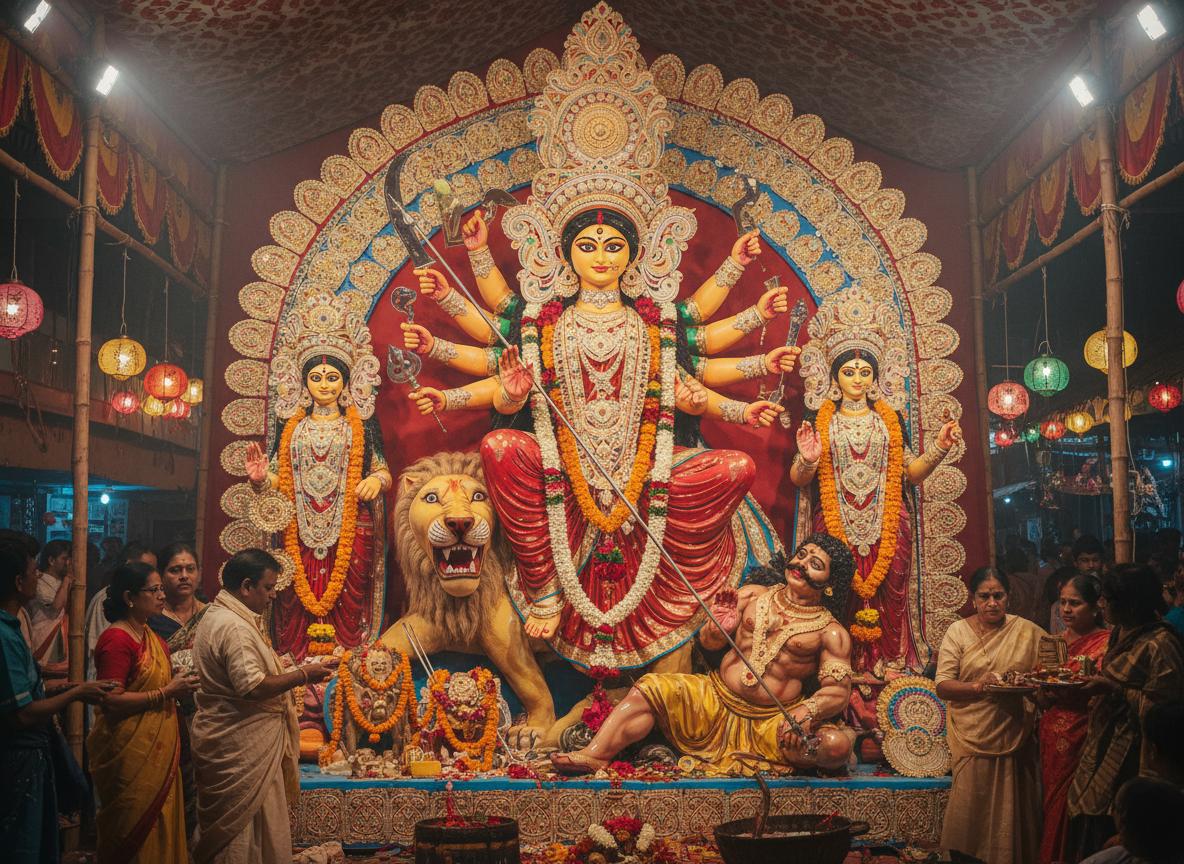
Simla Byayam Samity is not primarily a changing-theme puja. Its defining presentation is sabeki, or traditional:
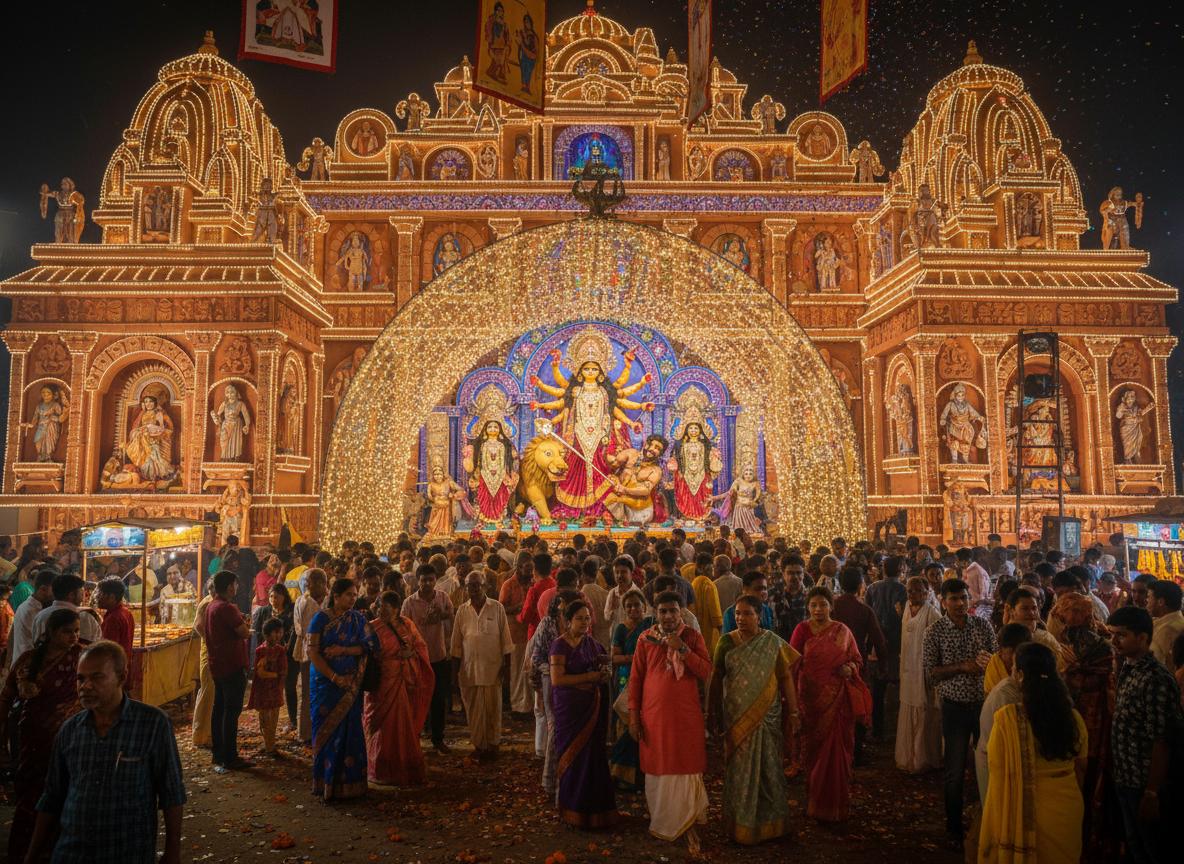
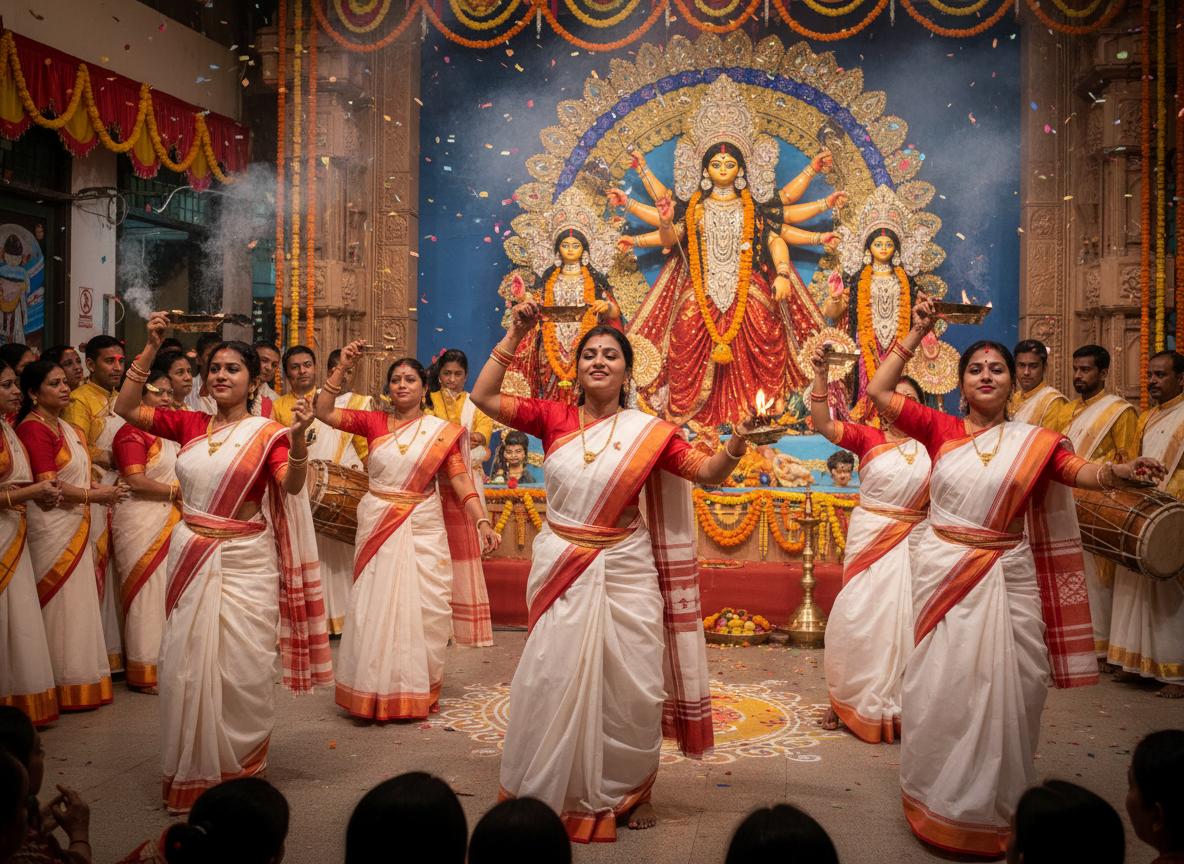
- Traditional Durga idol and ritual format.
- Strong emphasis on the historical meaning of sarbojanin worship.
- Heritage displays connected with the freedom movement and the samity’s physical-culture tradition.
- Social and patriotic messages rather than spectacular annual replicas.
For its 2025 centenary, the puja highlighted its connection with the freedom movement and retained its traditional idol style; sculptor Sanatan Rudra Pal was associated with the presentation.
USP:
- Pioneer of sarbojanin puja: Its greatest USP is its claim—and strong historical documentation – as one of Bengal’s earliest truly public community pujas.
- Revolutionary heritage: It originated in a nationalist gymnasium and was associated with freedom fighters, including Atindranath Basu and Netaji Subhas Chandra Bose.
- “Swadeshi Thakur” tradition: The khadi-clad idol and nationalist symbolism give it a distinctive historical identity.
- Traditional, not gimmicky: The puja’s appeal lies in ritual continuity and historical authenticity rather than a new theme every year.
- Social service and sports: The samity has historically undertaken relief work, blood donation, assistance to disadvantaged people and sports development.
- Vivekananda neighbourhood setting: Its location in the historic Simla area adds cultural depth and makes it an important stop on a heritage-focused North Kolkata puja route.
In Summary:
Simla Byayam Samity, founded in 1926 and now 101 years old, is a pioneering sarbojanin puja rooted in India’s freedom movement, known for its “Swadeshi Thakur,” traditional rituals and revolutionary social heritage.
Committee Details
| Club Name | Simla Byayam Samity |
|---|---|
| Address | 9B, Singhee Lane, Beadon Street, Kolkata- 700006 |
| Landmark | Girish Park Metro Station |
| Zone | North Kolkata |
| Established | 1926 |